A reroof usually needs no building consent, so no inspector checks the work. What the Building Code still requires, and the questions to ask instead.
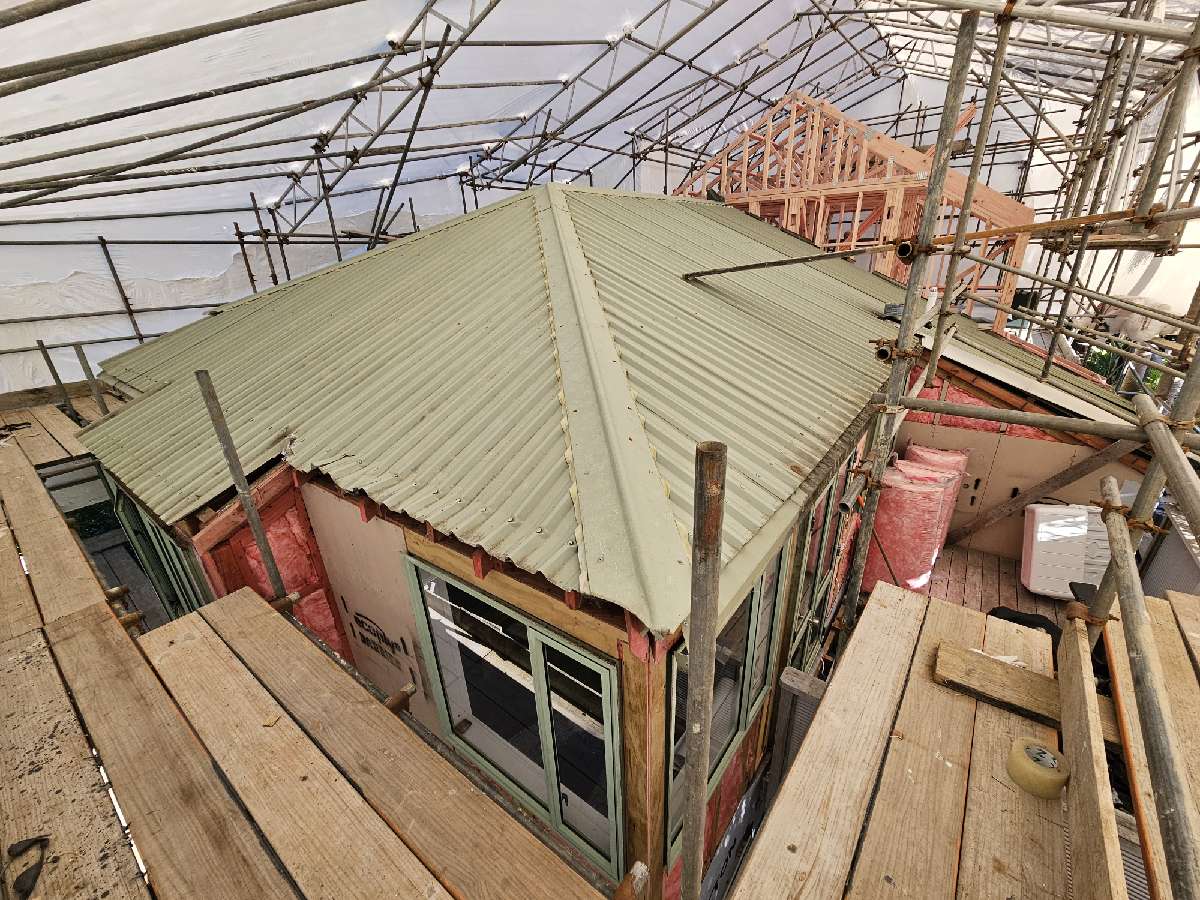
Short answer: usually nobody. Most straightforward reroofs are exempt from building consent, which means no council inspection at any stage. The Building Code still applies in full — the only person checking the work is the roofer doing it.
When you build a deck, put in a bathroom, or add a room, a council inspector turns up at set points and signs the work off. When you replace your entire roof — often tens of thousands of dollars, and the single component keeping water out of your house — usually nobody comes at all.
That isn't a loophole. It's how the rules are designed.
Under Schedule 1 of the Building Act 2004, certain building work is exempt from needing a consent. That includes the repair or replacement of a building product or assembly where a comparable product is used.
A straightforward reroof — same or equivalent material, same roof shape, structure unchanged — generally sits inside that exemption. So using it is entirely legitimate, and most Auckland reroofs proceed this way.
But exempt isn't the same as compliant. The exemption removes the council inspection, not the standard. The substrate still has to be sound enough to fix to, the roof still has to be installed to the manufacturer's specification, and it all still has to meet the Building Code. Plenty of roofs go on legitimately under this exemption without meeting any of that — and because nobody comes to check, nothing flags it at the time.
Which is why it's worth doing some diligence on who you engage. Whether the company holds Licensed Building Practitioner status in the Roofing class is a fair question. So is whether the people actually on your roof are the qualified ones, or whether the licence sits with someone in the office who won't be on site.
Worth reading: the NZ Metal Roof and Wall Cladding Code of Practice, which is the industry installation standard your roof should be built to.
This is where it stops being a simple rule.
The exemption depends on the existing roof having met its durability requirement under Building Code Clause B2. Where a roof has failed early rather than simply reached the end of its life, the exemption may not apply — and replacing like with like could produce the same failure again, which is what the consent process exists to prevent.
Whether that applies to your roof is a judgement call rather than a formula. It depends on the age of the roof, whether it has actually failed, and whether what's going back on is genuinely comparable. Both MBIE and the Licensed Building Practitioners Board describe it in those terms, and their advice where there's doubt is the same: either seek a discretionary exemption from the council, or simply apply for consent rather than risk getting it wrong.
Worth reading for yourself:
We'll tell you which way we think your roof falls, and if there's any doubt we'll say so rather than assume.
Yes, and this is the sentence that matters most here.
All building work must comply with the New Zealand Building Code under section 17 of the Building Act 2004, whether or not a consent is required. MBIE's guidance says the same: an exemption from consent is not an exemption from complying with the Building Code.
The legal standard your new roof must meet is identical whether or not an inspector ever looks at it. The only thing that changes is whether anyone independent verifies it.
For your roof, the relevant requirements sit mainly in Clause E2 External Moisture, and the NZ Metal Roof and Wall Cladding Code of Practice is a recognised related document for Acceptable Solution E2/AS1. Roof drainage capacity sits under Clause E1 Surface Water — which is why spouting fall and outlet spacing matter more than most people realise. Roof space ventilation sits inside the Code of Practice too, and we've written about why that affects your warranty.
None of that is optional. It's just unpoliced.
Only sometimes, and this surprises people.
Roofing is one of the Licensed Building Practitioner classes, so a licensing scheme exists. But the licence is only legally required for restricted building work — and restricted building work, by definition, is work that needs a building consent. If the work doesn't require a consent, it isn't restricted building work.
Follow that through. Most reroofs don't need a consent. Because they don't need a consent, they aren't restricted building work. Because they aren't restricted building work, no licence is legally required to do them.
Anyone can quote and install your roof.
Combine those two facts — no inspection, no licence requirement — and you get a market where the difference between excellent work and non-compliant work is largely invisible at the point of sale. Both roofs look the same from the ground on handover day. The difference shows up in year six, in a ceiling stain or a declined warranty claim.
This is part of the honest answer to why quotes for the same job can differ by thousands of dollars. We've broken down where that money actually goes: why do roofing quotes vary so much?
Since nobody is coming to inspect, your questions are the inspection.
Is anyone on this job a Licensed Building Practitioner?
On an exempt reroof the law doesn't require one, which is exactly why the answer tells you something. A licensed practitioner remains accountable to the Building Practitioners Board even when the job didn't need a consent. The LBP Board has published a case where a roofer reroofed over existing cladding using a Schedule 1 exemption, produced work that failed to meet the Building Code, and had their licence cancelled. An unlicensed operator faces no equivalent.
What are you installing to?
"To manufacturer specification, E2/AS1, and the NZ Metal Roofing Manufacturers Code of Practice" is a checkable answer. "To a high standard" is not.
What will I be able to see afterwards?
Once the roof is on, almost everything that determines how long it lasts is hidden — the substrate, the underlay, the fixings, the flashing laps, the ventilation path. If it isn't photographed on the way, it can't be verified later. That includes whatever is found under the old roof.
What paperwork do I get, and when?
Some of it comes before you sign. For residential building work of $30,000 or more including GST, you're legally entitled to a Disclosure Statement and MBIE's Prescribed Checklist before anything is signed, along with a written contract. You can ask for those at any time, whatever the value of the work. There's a fuller list in what should a roofing quote include?
The rest comes at the end: manufacturer warranty certificates registered in your name, a workmanship warranty in writing, a maintenance log, a practical completion and handover certificate, and a Record of Work where the work was restricted. If a roofer can't list what you'll be handed, that's your answer.
We'd rather the licence applied to every reroof, not just consented ones. It doesn't, so we've built our process around what the job requires rather than what anyone will make us do: photographing the substrate before the new roof goes on, working to the Code of Practice, and issuing the correct documentation for your records — your practical completion and handover certificate, your maintenance log, your manufacturer warranties, and a substrate report where one is needed.
That costs more than not doing it. It's part of why our quotes aren't the cheapest.
You're entitled to choose a cheaper roof. You're also entitled to know what the price difference buys — and on a job nobody inspects, that's hard to find out unless someone tells you.
Do I need a building consent to reroof my house in Auckland?
Usually not — most like-for-like reroofs are exempt under Schedule 1 of the Building Act 2004. It isn't automatic though. The exemption depends on whether the existing roof met its durability requirement, which is a judgement call rather than a formula. Confirm with Auckland Council if there's any doubt.
Does a roofer have to be licensed in New Zealand?
Only for restricted building work, which is work requiring a building consent. Since most reroofs are exempt from consent, no licence is legally required to do them — anyone can quote and install your roof.
Does the Building Code still apply if I don't need a consent?
Yes. Section 17 of the Building Act 2004 requires all building work to comply, consented or not. An exemption from consent is not an exemption from the Code.
Who inspects a reroof if there's no consent?
Nobody independent. The roofer doing the work is the only person checking it, which is why the documentation you receive, and who did the work, matter more than they otherwise would.