Choosing between metal roofing and tile roofing is one of the most critical decisions Auckland homeowners face. This comprehensive guide from metal roofing specialists compares both systems across durability, cost, maintenance, aesthetics, and performance in New Zealand's unique climate.
Understanding Metal Roofing in New Zealand
Metal roofing has grown increasingly popular across Auckland over the past few decades, and our specialisation in this material has given us deep insights into why it performs so well in Kiwi conditions.
Our most popular option for budget-conscious projects
Long-run or Standing Seam Metal Roofing
Sleeker, more contemporary appearance
Minimal penetrations mean fewer potential leak points
Popular for modern architectural designs
Slightly higher cost but excellent long-term value
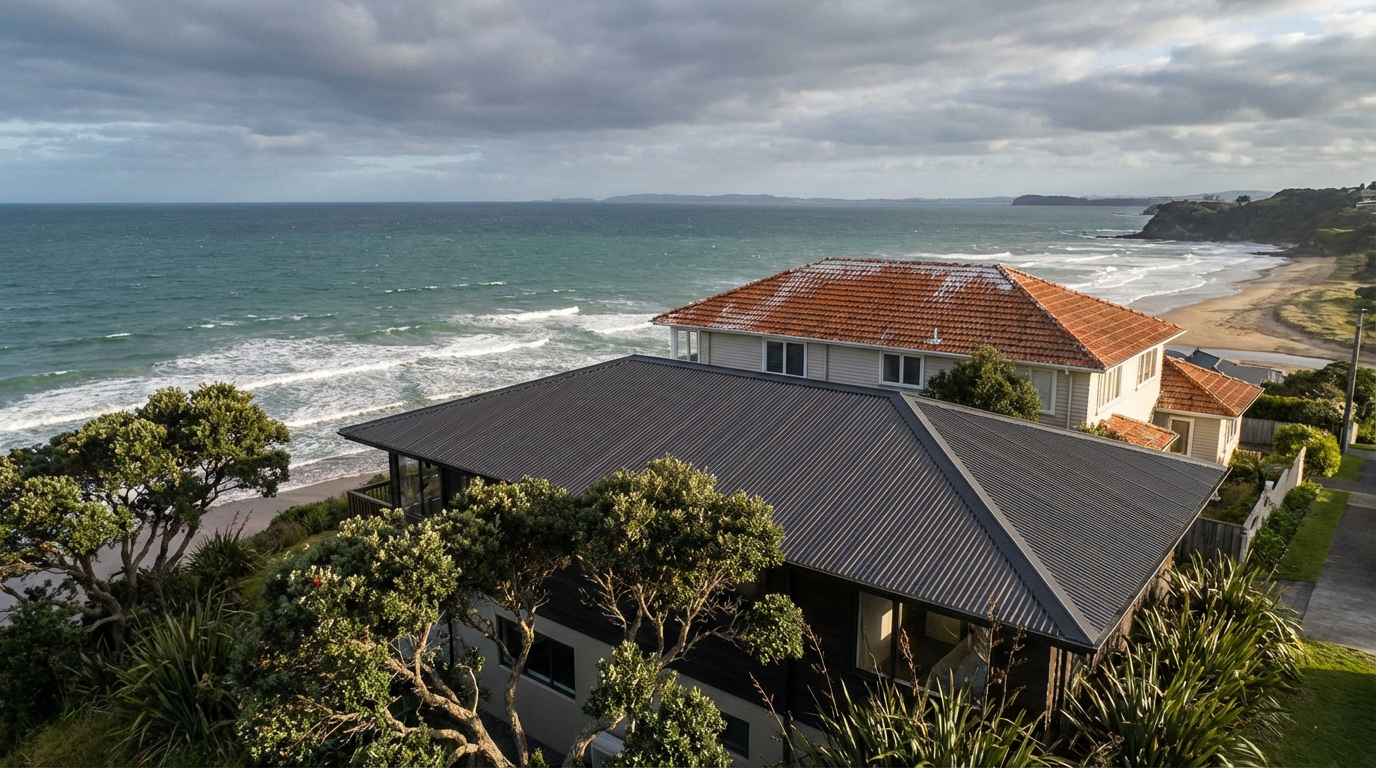
Our recommendation for coastal properties
Tile-Profile Metal Roofing
Combines the durability of metal roofing with a traditional tile appearance
Lighter weight than actual tiles (critical advantage)
Good compromise for character homes or heritage areas
Growing in popularity for those wanting traditional aesthetics without tile maintenance
Ideal solution when heritage restrictions apply
The Science Behind Metal Roofing Performance
Modern metal roofing systems use sophisticated coating technology specifically designed for New Zealand conditions. Products from manufacturers like Colorsteel feature multiple protective layers:
A metallic coating (typically Zincalume) that provides corrosion resistance
A primer layer that ensures paint adhesion
A topcoat with UV inhibitors and colour pigments
A protective clear coat that resists fading and chalking
This multilayer system enables metal roofing to withstand harsh UV exposure, coastal conditions, and temperature fluctuations. We've seen older-generation metal roofs fail not because the steel itself corroded, but because inadequate coating systems failed, exposing the metal beneath. This is why we only work with premium coating systems and reputable manufacturers.
Understanding Tile Roofing
While we don't install tile roofing ourselves, we believe in providing complete information so you can make an informed decision. Tile roofing has a longer history in New Zealand than metal roofing. Many of Auckland's oldest homes still sport their original tiles, some over a century old.
Types of Tile Roofing Common in Auckland
Concrete Tiles
The most common type of tile roofing in New Zealand
Manufactured locally, which helps with replacement matching
Available in dozens of profiles and colours
Excellent thermal mass properties
Generally more affordable than terracotta
Terracotta (Clay) Tiles
Traditional Mediterranean aesthetic
Extremely long-lasting in good conditions
Natural material with excellent environmental credentials
Premium pricing reflects manufacturing costs
Limited local availability compared to concrete
Glazed Tiles
Concrete tiles with a glazed finish
Enhanced weather resistance and colour retention
More expensive than standard concrete tiles
Beautiful aesthetic appeal
Based on our conversations with other roofing professionals and our experience assessing tile roofs for roof-replacement conversions, we know that tile roofing can stand the test of time when properly installed and maintained. However, the key phrase there is "properly installed and maintained," which involves significantly more work and cost than metal roofing.
Comparing Durability and Lifespan
When Auckland homeowners ask us about durability, they want to know how long each roofing type will actually last in real-world conditions, not laboratory testing or manufacturer claims.
Metal Roofing Lifespan in Auckland Conditions
Quality metal roofing, when properly installed with appropriate underlay and flashings (which we ensure on every project), typically lasts:
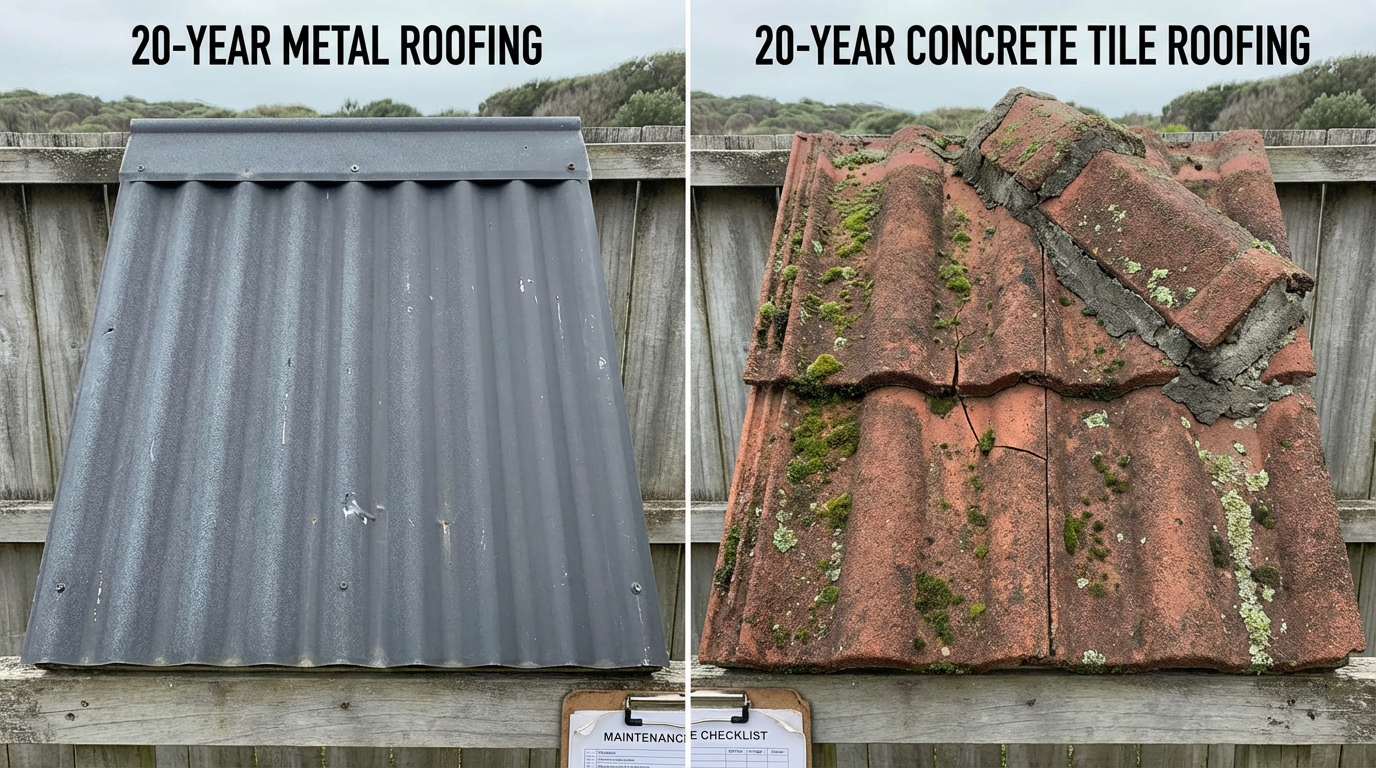
40 to 50+ years in standard suburban Auckland locations
30 to 40 years in harsher coastal environments (depending on coating grade)
50+ years with premium coating systems (like Colorsteel Endura or Colorcote Dridex)
The factors that most affect metal roofing longevity include:
Distance from the coast (salt spray is aggressive)
Quality of the protective coating system (we only use premium grades)
Proper installation, particularly of flashings and penetrations (our specialty)
Regular maintenance and cleaning (minimal requirements)
Ventilation beneath the roof (we design this correctly every time)
We've assessed hundreds of older metal roofing systems during replacement projects, and the failure patterns are predictable. Coastal properties with lower-grade coatings typically show rust spots and coating breakdown first. Inland properties often last considerably longer, with the roof looking tired rather than actually failing. This experience directly informed our decision to work only with premium metal roofing products.
Tile Roofing Lifespan in New Zealand
Tile roofing can potentially outlast metal roofing in ideal conditions:
70 to 100+ years for terracotta tiles (though rare to see this achieved)
50 to 70 years for quality concrete tiles
Shorter lifespans (30-40 years) in harsh coastal environments or with poor maintenance
However, there's a critical caveat with tile roofing that often surprises homeowners. While the tiles themselves may last 70 years, the underlayment, battens, and fixing systems don't. This means that tile roofing typically requires:
Full re-bedding and re-pointing every 20-30 years ($8,000-15,000)
Underlay replacement every 30-40 years ($20,000-40,000, requiring all tiles to be lifted)
Individual tile replacement as breakages occur ($50-150 per tile)
The real-world implication: while your tiles might last 70 years, you'll likely spend $40,000 to $80,000 in maintenance over that period. Metal roofing's total maintenance costs over 50 years typically range from $5,000 to $10,000.
Weight Considerations and Structural Requirements
This is a critical factor many homeowners overlook, with significant implications for both new-build roofing projects in Auckland and roof-replacement decisions.
Metal Roofing Weight Profile
Metal roofing is remarkably light:
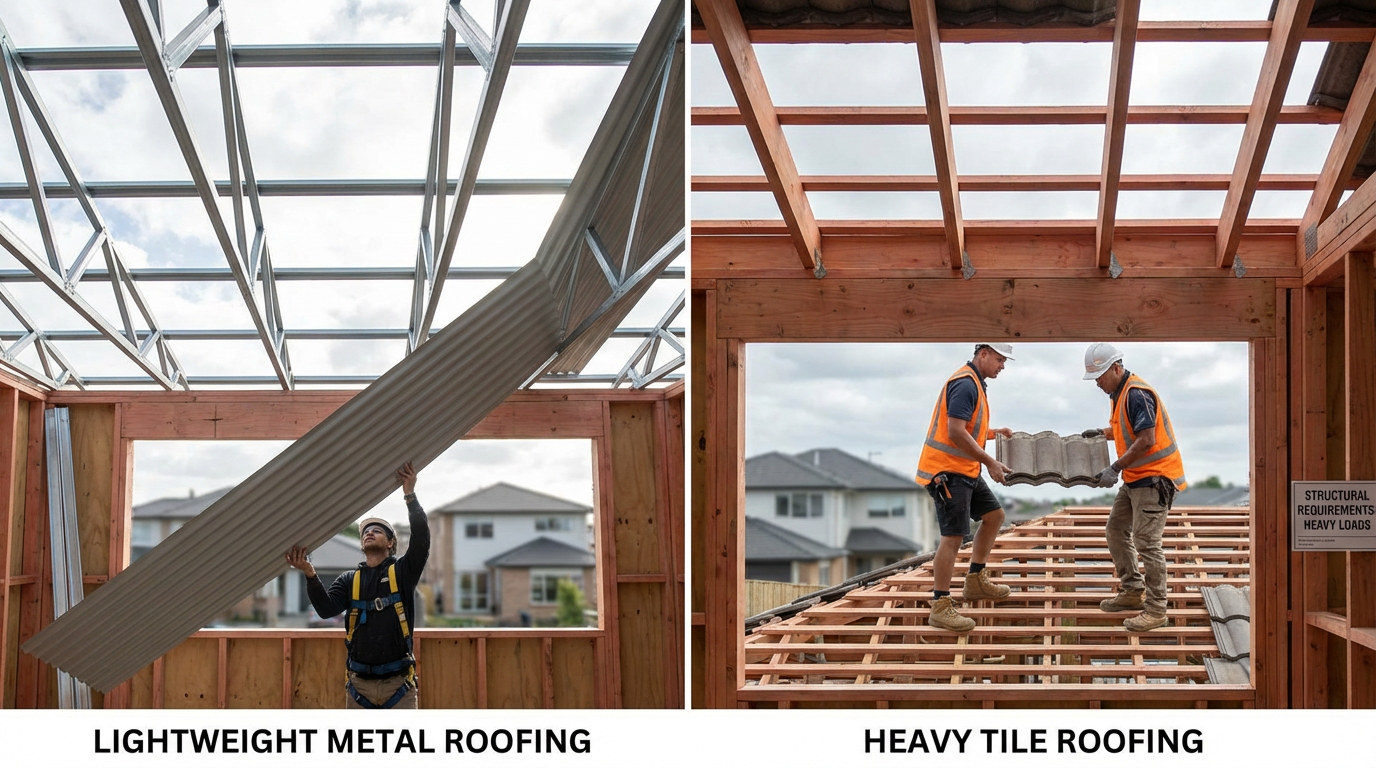
Typically 5-10 kg per square metre
Minimal structural requirements
Suitable for almost any building design
Allows for more open-plan designs with fewer internal load-bearing walls
Excellent choice for renovations or extensions on older homes
Reduced earthquake risk (less mass moving in seismic events, significant in NZ)
Easier and safer installation process
Less stress on the building over time
More flexibility for future modifications
We've completed numerous projects in which homeowners could afford larger roof overhangs, more complex designs, or additional architectural features, thanks to metal roofing's light weight, which reduced structural requirements and costs.
Tile Roofing Weight Considerations
Tile roofing is substantially heavier:
Concrete tiles: 40-55 kg per square metre
Terracotta tiles: 35-65 kg per square metre (depending on profile)
Requires significantly more substantial roof framing (larger timbers, closer spacing)
May require additional structural support in the building design
This weight difference has practical implications:
New buildings need to be designed for tile loads from the start (can't decide later)
Converting from metal roofing to tile roofing may require expensive structural upgrades
Converting from tile roofing to metal roofing is straightforward (we do this regularly)
Earthquake performance is theoretically less favourable with heavier roofing
Installation requires more labour and takes longer
Many of our roof replacement projects involve converting from tile to metal roofing, and homeowners are often surprised at how much more straightforward and cost-effective this conversion is compared to the reverse.
Cost Comparison: Initial Investment and Long-Term Value
Let's talk about money: roofing is a significant investment for any property owner. As metal roofing specialists, we're very familiar with these numbers.
Upfront Costs
Based on current Auckland pricing for a typical 150-200 square metre residential roof:
Metal Roofing Costs:
Entry-level corrugated: $90-130 per m² installed
Mid-range longrun: $130-170 per m² installed
Premium profiles and coatings: $170-220+ per m² installed
Total project: $13,500-$44,000+ depending on specifications
Faster installation (3-7 days typically)
Tile Roofing Costs:
Standard concrete tiles: $150-200 per m² installed
Premium concrete or entry terracotta: $200-280 per m² installed
High-end terracotta or specialty tiles: $280-400+ per m² installed
Total project: $22,500-$80,000+ depending on specifications
Longer installation (7-14+ days typically)
The initial cost advantage clearly goes to metal roofing, particularly at the entry and mid-level ranges. However, the real story emerges when you look at lifetime costs.
Long-Term Value Equation
This is where metal roofing really shines, and it's a major reason we chose to specialise in this material.
Total lifetime cost: Initial investment + $40,000-80,000+ in maintenance over 50 years
Example: $35,000 install + $60,000 maintenance = $95,000 over 50 years
The lifetime cost difference of $40,000 - $100,000 is substantial. This mathematics was a key factor in our decision to focus exclusively on metal roofing. We wanted to offer our clients the best possible value proposition.
Performance in Auckland's Weather Conditions
New Zealand's weather is notoriously unpredictable, and Auckland brings its own specific challenges. Our specialisation in metal roofing has given us deep insights into how it performs across all scenarios.
Wind Performance
Auckland's exposed locations can experience significant wind events, particularly during spring and winter storms.
Metal Roofing Wind Performance:
Excellent when properly fixed with appropriate screw patterns (our standard practice)
Modern fixing systems are engineered for high wind loads
Lighter weight means less uplift force in extreme winds
Vulnerable at ridges and edges only if installation isn't perfect (we guarantee proper installation)
We rarely see well-installed metal roofing fail in regular Auckland wind events
Our wind-specific installation protocols exceed building code requirements
Tile Roofing Wind Performance:
Heavy weight provides some resistance to uplift
Individual tiles can be dislodged in severe wind events
Edge tiles and ridges are particularly vulnerable points
Older installations with degraded mortar bedding are at higher risk
Post-storm inspections often reveal displaced or broken tiles
Repairs can be needed after significant weather events
UV Radiation and Fading
New Zealand's high UV levels are more challenging on roofing materials than in most Northern Hemisphere countries. This is particularly relevant to maintaining your roof's appearance over time.
Metal Roofing UV Performance:
Modern coating systems include UV inhibitors (standard on products we use)
Premium products (Colorsteel Endura, etc.) show minimal fading over decades
Entry-level products may show noticeable fading after 15-20 years (we recommend against these)
Degraded coatings can be repainted (though this is expensive)
Choose an appropriate roof colour selection with UV resistance in mind (we provide guidance)
Tile Roofing UV Performance:
Terracotta is naturally UV-resistant and doesn't fade
Concrete tiles can fade significantly, notably darker colours
Glazed tiles resist fading better than unglazed tiles.
Fading is primarily aesthetic, doesn't affect performance
Can be painted to refresh appearance if desired
Coastal Environment Performance
Auckland's coastal suburbs face particularly aggressive conditions with salt spray and high humidity. This is where metal roofing's performance advantages become especially clear.
Metal Roofing in Coastal Areas:
Requires higher-grade coating systems (Z275 minimum, preferably higher - we specify correctly)
Premium products are essential for properties within 1km of the coast (our standard recommendation)
Regular washing helps extend life (removes salt buildup - we advise all coastal clients on this)
Expect a 10-15 year reduction in lifespan compared to inland locations (still 30-40+ years)
Still a practical choice with appropriate material selection (our specialty)
We've successfully installed hundreds of coastal metal roofing projects with excellent long-term performance
Tile Roofing in Coastal Areas:
Terracotta performs excellently in coastal conditions
Metal components (nails, clips) are vulnerable to corrosion
Regular maintenance is more critical in coastal locations
Higher lifetime costs in these environments
Get Advice About Your Roof Options Today
If you are weighing up metal roofing versus tile roofing for your Auckland property, the best next step is to get advice tailored to your exact location, budget, and long term plans. At Impact Roofing Solutions, we specialise in premium metal roofing systems designed specifically for Auckland conditions, from coastal homes to inner city renovations.
Get in touch with our team today for a free, no obligation roof assessment and quote. We will walk you through the right profile, coating system, and colour choice for your property, explain the true lifetime costs, and give you honest recommendations based on performance, not sales pressure. Whether you are planning a new build or considering a roof replacement, we are here to help you make a confident, informed decision.